
How do I know if I have lice?
The symptoms of hair lice are one of the most worrying, especially with the constant itching and the difficulty in distinguishing between lice and dandruff. Many wonder: How do I know I have lice? Or how do I know if I have lice? In this article, we explain the signs of lice clearly, explain when lice itching is a sign of an actual infestation, and how to detect the presence of lice and nits in the hair early to avoid aggravating the issue.
Hair Lice Symptoms
Lice are often not detected from just one sign, but from a cluster of symptoms that appear together. Noticing these signs early can help detect lice quickly and start treating them before they get worse.
1. Severe and persistent itching
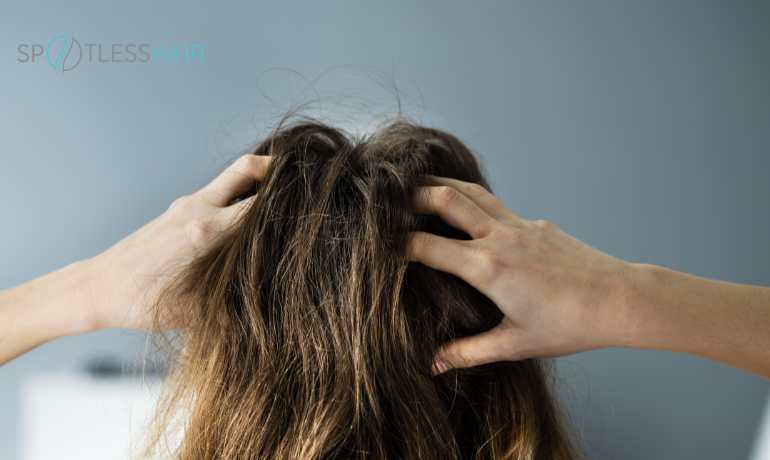
Constant itching is one of the first and most common signs of hair lice. Hair lice occur in only one in three people, so they may not occur in everyone. The itching is caused by the scalp’s sensitivity to the saliva that lice produce while feeding. The louse bites the skin to suck blood. They secrete saliva containing a substance that prevents clotting, which causes irritation and sensitivity in many people, leading to frequent itching, especially at night when the lice are most active.
2. The appearance of nits (lice eggs) attached to the hair
Eggs are the most important sign of lice infestation in children because they do not move and are firmly attached to the hair root. The eggs are stuck due to a sticky substance secreted by the louse, which is similar in structure to the hair, which is why it never comes off with washing. You can see how to detect lice eggs by examining the hair roots under good lighting, as the nits appear yellowish-white in color.
3. Seeing live lice (a difficult but sure sign in advanced cases)
Seeing live lice is one of the signs of the presence of lice in a child’s hair, but it is one of the most difficult signs to notice because lice move very quickly and change color after feeding to be closer to the color of the hair, making it very difficult to distinguish them inside the strands.
Also, lice run away immediately when the hair is exposed to light, so when using a cell phone flash or strong lighting while searching for lice infestation, lice tend to quickly hide inside the hair, making them harder to see and making it difficult to detect lice early.
That’s why many moms rely on seeing the nits rather than the lice themselves, because it’s clearer and easier to confirm a lice infestation.
4. Redness and sensitivity of the scalp
The presence of lice in the scalp may cause visible redness and mild sensitivity and is considered a symptom of lice and hair infestation, due to the repeated bites of lice as they feed on blood. A single louse feeds two to four times a day, and with each bite it secretes saliva containing a substance that prevents blood from clotting, which leads to skin irritation and the appearance of red marks:
- Red spots behind the ear or down the neck
- Mild scalp sensitivity
- Discomfort when touching the affected areas
These marks appear as the bites continue and are a sign that the lice infestation has begun.
5. Small scratches or superficial cuts due to constant itching
Frequent itching is a symptom of lice infestation, which can lead to small scratches and superficial wounds on the scalp, especially in people or children who can’t stop itching. As they continue, these wounds may enlarge and become painful.
In some cases, if not treated quickly, these scratches can develop into a bacterial infection that needs stronger medical treatment, so it’s important to deal with lice early on before any complications arise.
6. Difficulty falling asleep
A person with lice may have difficulty sleeping, because lice are most active during the night. These insects prefer darkness and warmth, which makes them move more through the hair at bedtime, increasing itching and affecting sleep.
Where are lice found on the scalp?
Lice prefer certain places on the head because they are warmer, wetter, and away from light, and this helps them live and reproduce. Especially behind the ears and at the back of the neck (the back of the head), which is why moms find infestations in these areas – because the louse lays its eggs there, and the eggs are firmly attached to the hair roots through a very strong adhesive. Knowing how to detect lice eggs at an early stage helps prevent the spread of infection among children at home or at school.
How do I know if I have lice?
Lice can be detected early on by noticing mild, recurring itching on the scalp, especially behind the ears and at the back of the neck, even before the lice are visible to the eye. Small white dots (lice eggs) that stick to the hair and don’t come off easily are one of the earliest signs of an infestation. To determine the easiest way to determine the age of a lice infestation, we rely on several obvious signs, the most important of which are the following:
First: The distance between the egg and the scalp
At the beginning of an infestation, female lice stick the eggs very close to the scalp because the egg needs the heat of the scalp to hatch.
- If the eggs are attached to the hair very close to the scalp (about 1-2 millimeters), this often indicates a recent infection.
- If the eggs are farther away from the scalp (more than 2-3 millimeters), this indicates that the infection is old, as the eggs have moved away as the hair grows.
Secondly: Dead or hatched eggs
Lice eggs usually take 7 to 10 days to hatch, so if you find dead eggs or hatching eggs (white or transparent shells), it means that the infestation is not new, often more than a week old. The presence of dead eggs means that lice have been around for a while, even if no live lice are seen at the same moment.
III: Number of lice and nits
- In more recent infections, the number of rosettes is few and the injury is limited to small areas, especially behind the ears and the back of the neck.
- In old or advanced infections, the number of nits is large and obvious, and the rosettes are spread in more than one strand of hair, and we may observe dozens of nits in a single strand.
IV: Presence of live lice
Seeing live, moving lice is still the strongest evidence that the infestation is still active and not in its infancy, regardless of where the nits are located or how many there are.
Frequently Asked Questions About Hair Lice Symptoms
1. How do I know if I have lice?
Lice infestation can be recognized by observing several obvious signs, the most important of which are constant itching of the scalp and the appearance of small white dots (nits) that are attached to the hair and do not move easily. The louse itself can also be seen when examining the hair under good lighting or with a magnifying glass. The presence of these signs together is a strong indication of an infestation and needs careful examination or proper treatment.
2. How do I know if lice are in the early stages?
The first sign of lice is often a sudden itchy scalp, even for no apparent reason. The itching is mild at first, especially behind the ears and at the back of the neck. However, you may notice very small dandruff-like dots attached to the hair that don’t come off easily, which are lice eggs, signaling the beginning of an infestation.
3. How do I know if the itch is caused by lice?
If the itching is accompanied by small, persistent dots sticking to the hair (petechiae).
4. Can lice be easily seen?
They may be hard to see at first because they are small and fast, but in the advanced stages of infection, live lice can be seen moving between the hairs.
5. Can people get lice without itching?
Yes, some people don’t feel itchy in the first stage, so the infection can only be detected when you see psoriasis.
Conclusion:
One of the most common questions we get at Spotless Hair: How do I know I have lice? In the early stages of a lice infestation, the symptoms are simple, such as mild intermittent itching, especially behind the ears or at the back of the head, with small white or transparent dots attached to the hair roots that do not go away easily. These early signs may not be alarming at first, but they are an important indicator of the onset of the infection. Early attention to these symptoms helps to intervene quickly and treat lice before they multiply, making it easier and faster to get rid of them and prevent re-infestation. Paying attention to the early signs, regular check-ups, and seeking professional help when needed are the best ways to protect the family and prevent the cycle of lice from continuing.
If you notice any of the symptoms of lice infestation, it is advisable to visit Spotless Hair, which specializes in treating lice and eggs in one session. Early intervention helps end the issue quickly before it gets worse, using a medical device that is safe and personalized for children and adults.
- You can easily book an appointment at the Spotless Hair Center via the booking link.
- To get in touch with our team, please contact 920035512
- For more information about our services, visit our website.
Scientific references
- Saudi Ministry of Health – Head Lice.
- American Academy of Pediatrics – Head Lice Treatment Guidelines (AAP Guidelines).
- World Health Organization – General recommendations for prevention and treatment.


No comment