
Nits in Hair
In this guide, we will show what nits look like in hair through real images that clearly demonstrate how lice eggs appear on the scalp.
This page aims to help you easily identify nits, understand their color, and how they attach to the hair, making it easier to distinguish them from dandruff or other debris.We also explain the difference between live and dead nits, along with important information that helps in early detection before they hatch and turn into lice.The goal of this content is to help you accurately identify nits and deal with them properly to prevent further spread.
What Are Lice Eggs (Nits) Made Of?
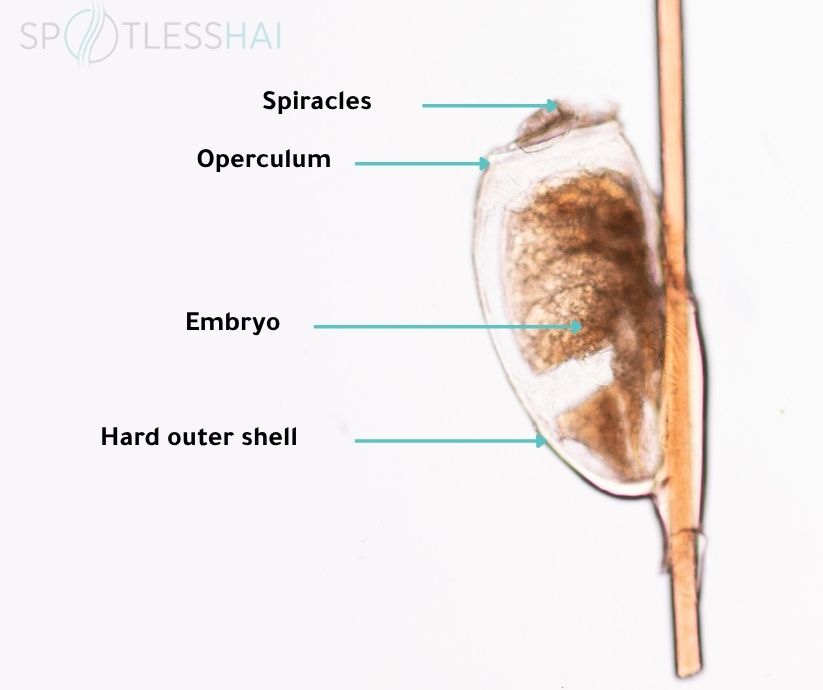
A lice egg (nit) contains several essential parts that protect the embryo and support its development:
- Embryo: the tiny developing louse inside the egg.
- Chorion (outer shell): a hard protective layer that shields the embryo from external factors like dryness.
- Operculum (cap): a small lid at the top of the egg that opens when the nymph hatches.
- Tiny air openings: allow oxygen to enter, which is necessary for the embryo’s growth
How Do Lice Eggs (Nits) Breathe?
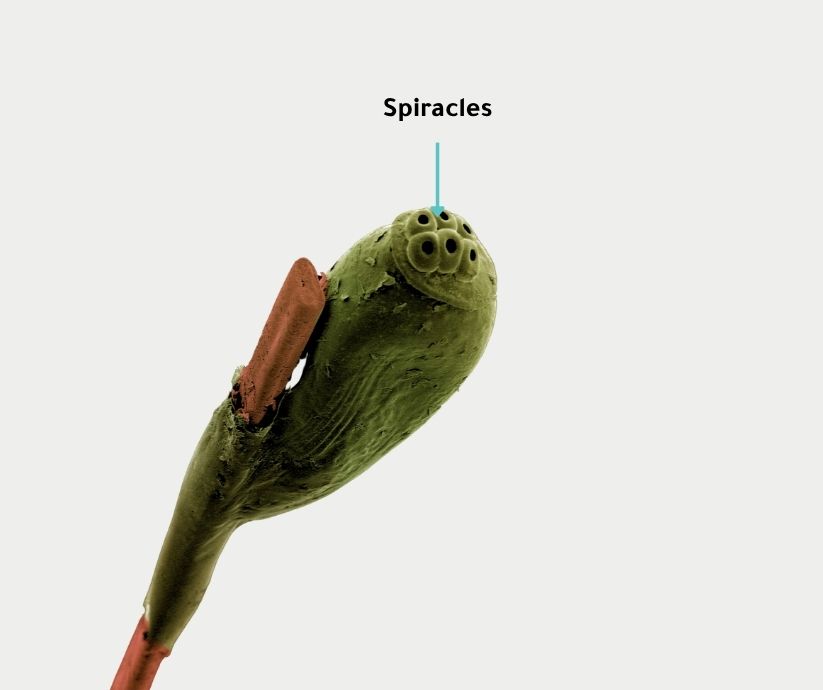
Lice eggs have a very fine respiratory system that allows oxygen to enter and keeps the embryo alive until it hatches.
At the top of the egg, there is a small cap called the operculum, which contains tiny openings known as aeropyles.
These openings allow air to enter, delivering oxygen to the embryo while releasing carbon dioxide, ensuring continuous development inside the egg.
Difference Between Live and Dead Nits
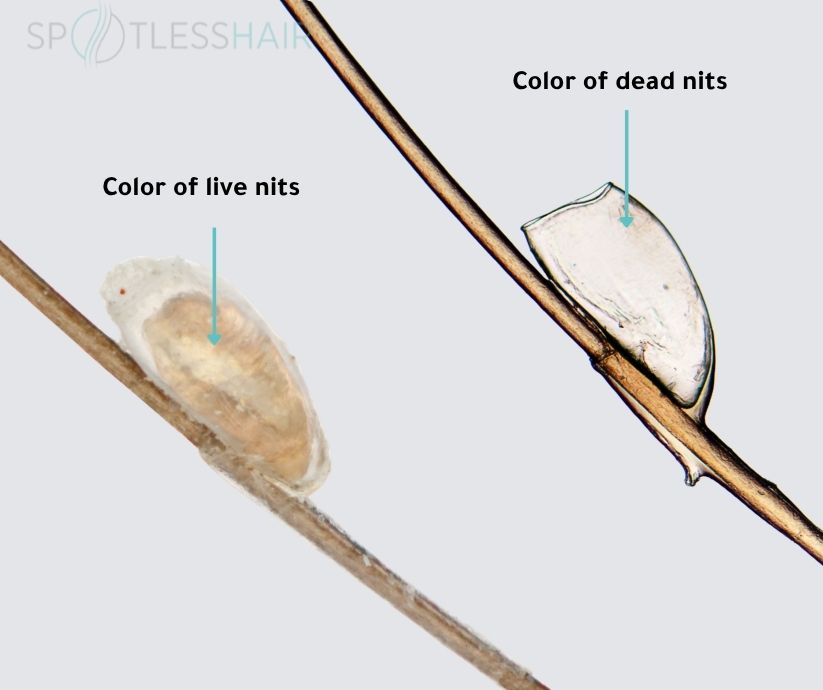
The color of nits varies depending on their condition, which helps in identifying them:
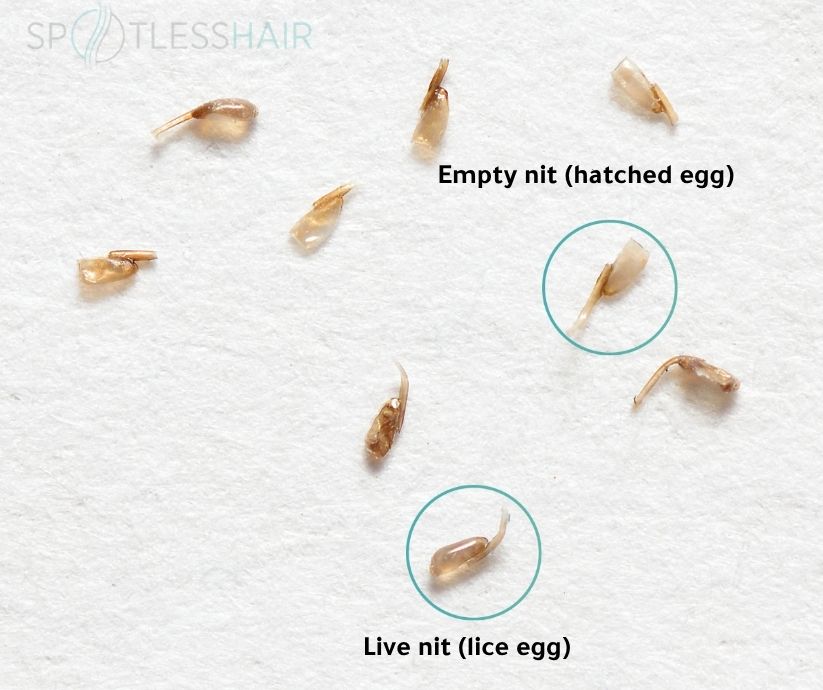
- Live nits: light brown to golden in color and appear filled from the inside because they contain a developing embryo
- Dead nits (empty shells): white or transparent and appear empty since the embryo has already hatched
The position of the nit on the hair strand, along with its color, helps determine whether the infestation is active or old.
What Do Nits Look Like in Hair (With Pictures)?
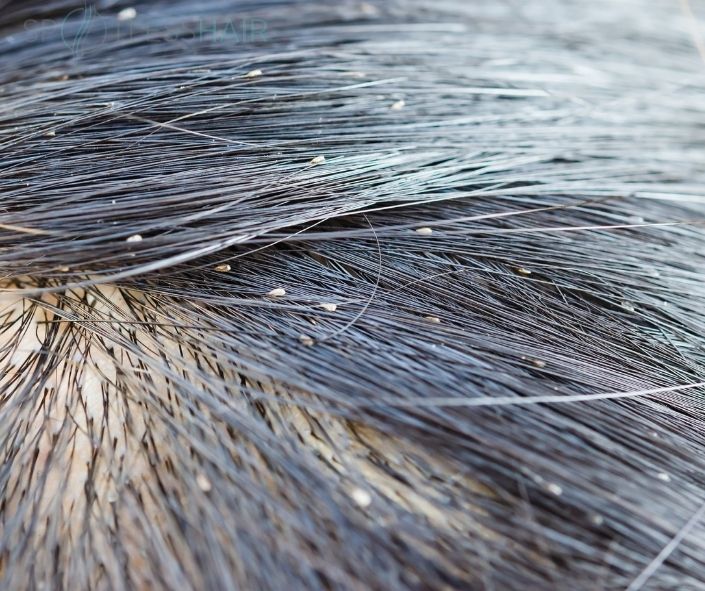
Nits appear in the hair as very small white or yellowish dots attached firmly to the hair shaft.
They are usually found in specific areas of the scalp, especially:
- behind the ears
- the lower back of the head (nape of the neck)
These areas provide a suitable environment for lice eggs to attach and develop.
Nits stay fixed in place and do not move, and they are difficult to remove because they stick strongly to the hair.
What Happens to Empty Nits After Hatching?
Lice eggs hatch within 7 to 10 days, releasing a young louse (nymph).
After hatching:
- the empty shell (nit) remains attached to the hair shaft
- it becomes white or transparent
- it moves away from the scalp as the hair grows
These empty shells are often mistaken for dead nits, but they are simply leftover egg casings after the lice have already emerged.
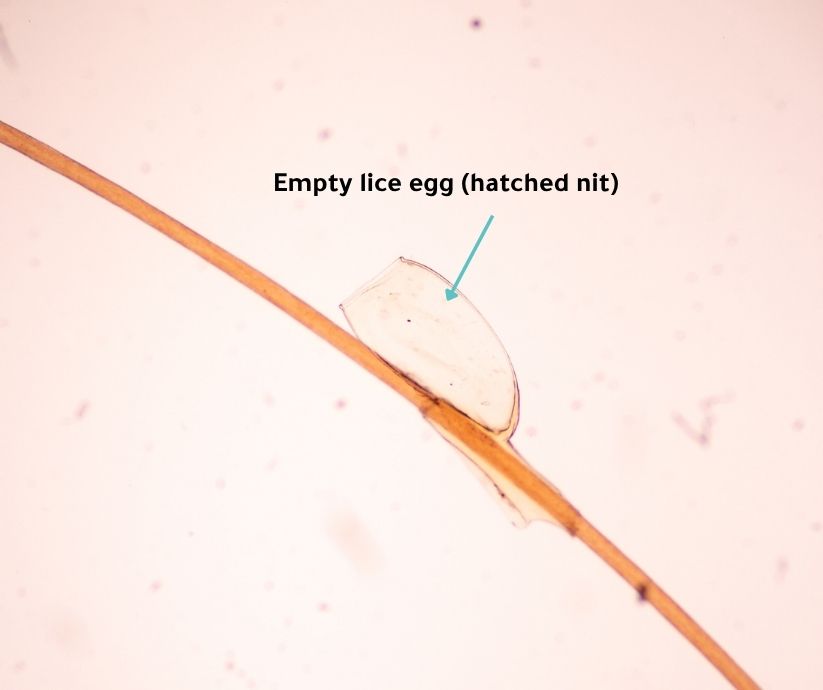
Live vs Dead Nits (After Hatching) – Key Differences
Live nits:
- Color: yellowish or golden
- Appearance: filled from the inside
- Location: very close to the scalp
- Condition: contains a developing embryo
- Attachment: firmly stuck to the hair
Dead nits (after hatching):
- Color: white or transparent
- Appearance: empty or open at the top
- Location: farther from the scalp as hair grows
- Condition: no longer contains anything
- Attachment: still attached to the hair
Spotless Hair for Lice Removal
In conclusion, understanding what nits look like in hair and how they attach to the hair shaft helps you identify the difference between live and dead nits, as well as detect lice infestations at an early stage. However, removing nits completely at home can be difficult, especially due to their strong attachment to the hair. That’s why, if you are looking for a fast and effective solution to get rid of lice and nits, Spotless Hair Center offers specialized sessions using safe and effective techniques to remove lice and nits with precision, along with a thorough before-and-after inspection to ensure the best results.

