
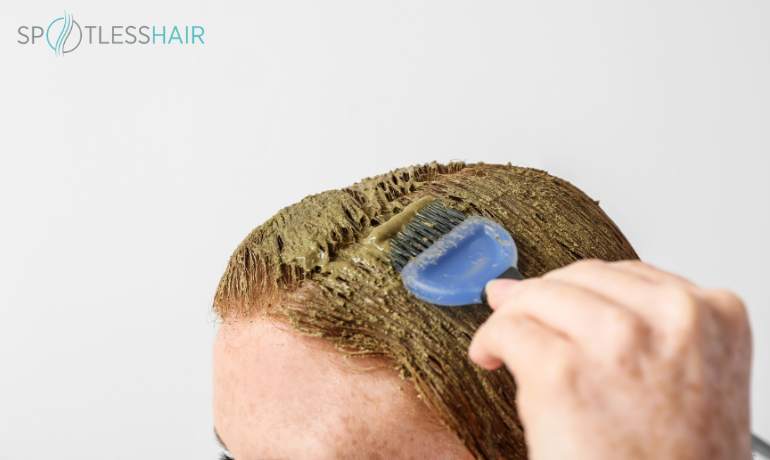
Does henna kill lice? What is the effect of henna on lice and nits?
Many mothers are looking for natural and safe solutions to treat lice, and henna is one of the most popular home recipes, but does henna kill lice? Does henna kill lice? Can lice be treated with henna? Or does henna increase lice? In this article, we explain the scientific truth away from common beliefs.
What is Henna?
Henna is a natural plant whose material is extracted from the leaves of the henna tree, where the leaves are dried and ground into a green powder, then mixed with water and used on the hair or skin. Henna has been known since ancient times in the Arab world, and has been used in decoration and hair and scalp care.
Henna has well-known benefits, including soothing the scalp, reducing itching, improving the appearance of hair and being used as a natural dye. In addition to its benefits, henna has a special place among Arabs and Muslims, as its use is mentioned in the Prophetic Sunnah, and the Prophet (peace be upon him) used and was known to use henna, and it was also used for coloring, treatment, and decoration. In Islamic culture, henna is associated with religious and traditional value, not just cosmetic use.
For this reason, many people prefer to turn to henna for hair and scalp issues, including lice infestations, as it is natural and safe to use.
Does henna get rid of lice?
The short answer: No.
Henna does not eliminate lice or nits permanently, and treating lice with henna is not an effective treatment, although it has been used for years.
Why do some people believe that henna kills lice?
Some believe that henna may kill lice because it causes a noticeable dryness in the scalp, but this belief is scientifically inaccurate. A dry scalp does not mean that the lice themselves are dry or dead.
Lice do not rely on scalp moisture for survival, they feed directly on blood, so reducing the oils or moisture in the skin does not deprive them of their food source and does not lead to their death. In addition, the lice’s body is covered with a hard outer layer that protects it from fluid loss, making it resistant to dehydration caused by topical substances like henna.
When applied to the head, henna creates a cooling sensation, which may temporarily slow down the movement of lice, but does not kill them. The coolness caused by henna is superficial and temporary, and does not reach very low temperatures. Studies on head lice indicate that lice are unaffected by normal cold, and only die when exposed to extremely low temperatures, often near or below freezing, for an extended period of time, which is not the case with henna.
For this reason, some moms may notice a temporary improvement after using henna. Such as less itching or reduced movement of lice. But the infestation returns after washing the hair. Especially if the nits remain attached to the hair, they hatch within days and the issue persists
What do the studies and experiments say?
There are no credible scientific studies proving that henna kills lice, eliminates nits, or prevents re-infestation. To date, henna has not been included in any approved medical recommendation for the treatment of lice. It has not been shown to affect the life cycle of lice or prevent nits from hatching. Practical experience shows that using henna may temporarily relieve some symptoms. Such as itching or discomfort. But the lice are still present and reappear after a short period of time. Especially if the nits remain attached to the hair. And that’s why. Henna is not an effective or definitive treatment for lice. But it is included in traditional recipes that are not based on proven scientific evidence. According to international medical websites such as the Mayo Clinic, home remedies do not have strong clinical evidence proving their effectiveness in eliminating lice and nits, and health authorities recommend prescribed treatment or careful combing to remove lice.
Does henna increase lice or cause lice to appear in hair?
Henna does not increase lice and does not cause lice to appear in the hair. Lice are not caused by henna or any substance applied to the hair, they are only transmitted by direct contact between heads or sharing personal items.
Can lice-killing shampoos be used right after henna?
To date, there are no reliable scientific studies or approved medical recommendations that clarify the possibility or effectiveness of using lice shampoos immediately after applying henna. There are also no guidelines that confirm that combining henna, which is a strong and drying substance for the scalp, with lice shampoos gives a better result in eliminating lice or nits. and lice shampoos work better in eliminating lice or nits. Because of henna’s effect on the scalp and the potential for increased dryness or irritation. It is usually advised to be careful not to combine these substances in a short period of time, especially in children or those with sensitive scalps. Allow the scalp a chance to normalize before using any treatment products.
What is an effective treatment for lice and nits?
An effective treatment for lice and nits is one that eliminates live lice and removes nits at the same time. If the nits remain, the infestation will return within days. Many moms are looking for a safe solution for their children without resorting to chemical products. That’s why there are multiple options for lice treatment. Such as some homemade recipes or medicated shampoos. However, these solutions may vary from person to person, and may require repetition and time. For this reason, visiting a specialized lice removal center is one of the fastest and most effective solutions. Lice and nits are dealt with precisely and safely, without damaging the scalp or the child’s hair. At Spotless Hair Lice Treatment Center, we offer lice removal sessions using specialized tools and techniques that aim to get rid of lice and nits in the first session, keeping in mind the safety of children and the comfort of parents.
Conclusion:
It is important to emphasize that Sidr or henna do not increase or cause lice in the hair, and lice infestation is not associated with the use of henna or other natural substances. Lice are only transmitted through direct contact or the sharing of personal items, not from hair dyes or henna. Although some believe that henna may kill lice, it is not an effective or guaranteed remedy to get rid of lice or nits. Therefore, when an infestation is confirmed, the best solution is to seek specialized and safe treatment methods that ensure complete elimination of lice.
- You can easily book an appointment at the Spotless Hair Center via the booking link.
- To get in touch with our team, please contact 920035512
- For more information about our services, visit our website.
Scientific references:
- Saudi Ministry of Health
- American Academy of Pediatrics
- World Health Organization


No comment