
Lice Life Cycle
Understanding the lice life cycle is essential to know how lice spread and reproduce quickly. Lice go through several stages, starting from the egg (nit) and ending with the adult louse, which can lay new eggs and continue the cycle. Knowing these stages doesn’t just help you understand the problem — it also helps you deal with lice at the right time and prevent reinfestation.
Lice Life Cycle Stages
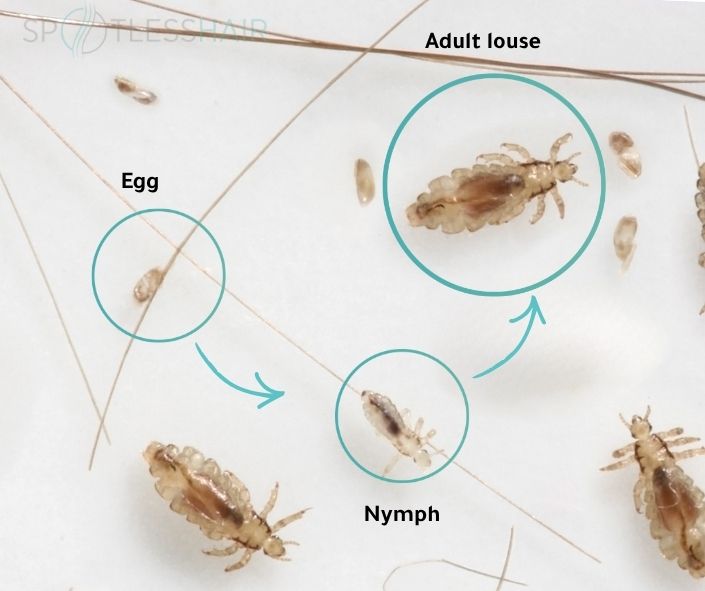
Lice go through three main stages:
- Nits (eggs): the first stage, attached to the hair and located close to the scalp
- Nymph: a small louse that hatches from the egg and looks like an adult but smaller
- Adult louse: the final stage, where the louse grows and begins feeding on blood and reproducing
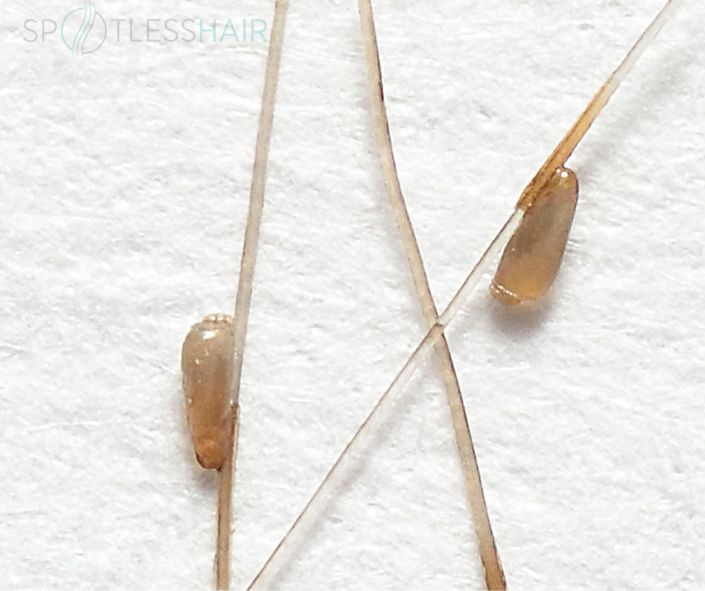
Stage 1: Egg (Nit)
Lice eggs are usually yellowish or light brown and may appear slightly shiny because they contain a developing embryo. They stick firmly to the hair due to a strong adhesive substance and are usually found close to the scalp. Nits typically hatch within 7 to 10 days.
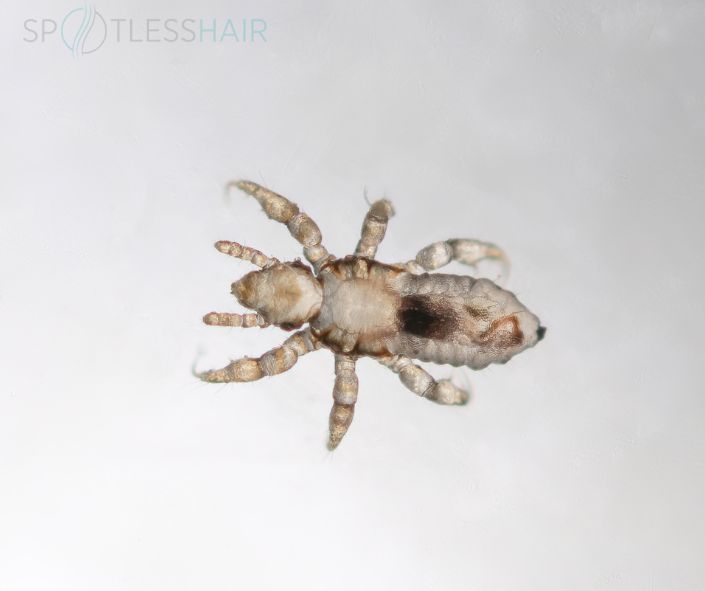
Stage 2: Nymph
A nymph is a very small louse that hatches from the egg. It resembles an adult louse but is smaller in size. After hatching, the nymph starts feeding on blood immediately and grows gradually over 7 to 10 days until it becomes an adult.
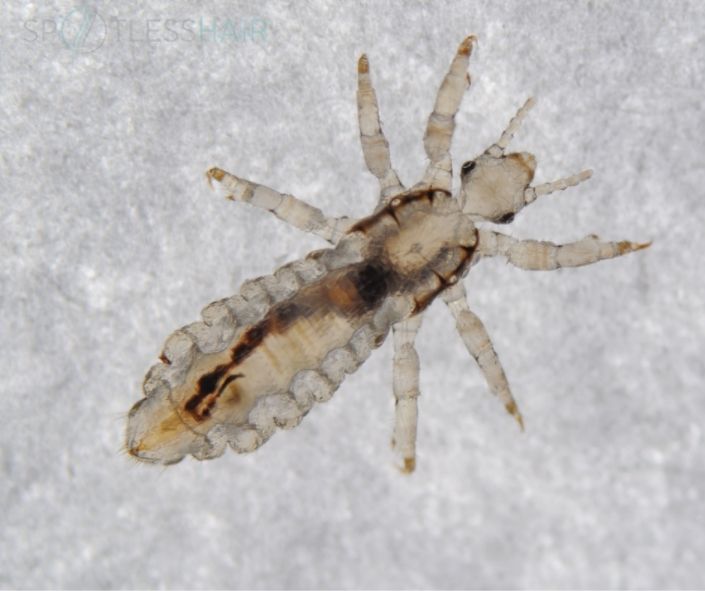
Stage 3: Adult Louse
The adult louse is fully developed and capable of reproduction.
It lives for about 30 days, during which the female lays eggs daily.
A female louse can lay approximately 3 to 5 eggs per day, which leads to rapid spread if not treated.
The Difference Between Nymph Lice and Adult Lice
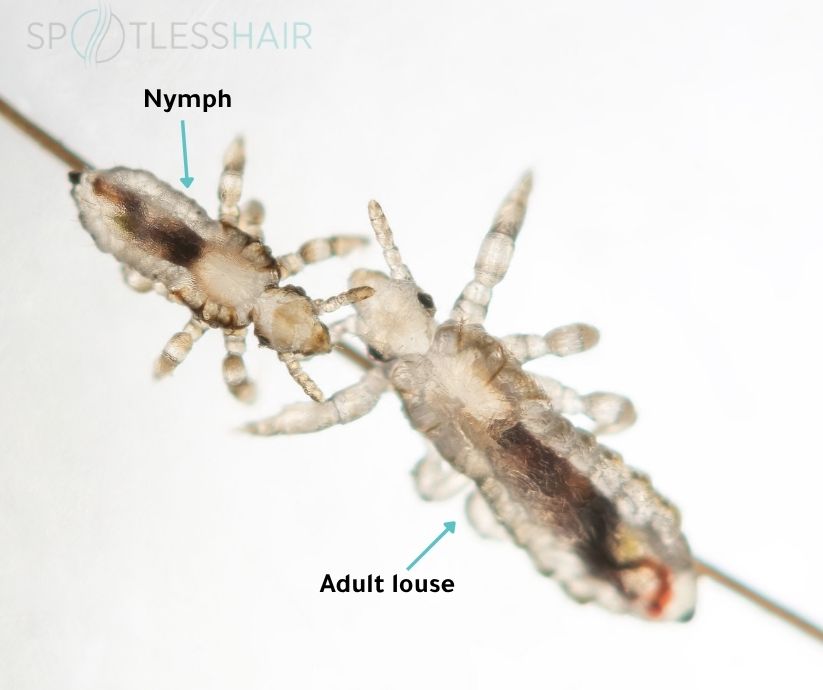
It can sometimes be difficult to distinguish between nymph lice and adult lice. However, there are clear differences between them. Nymph lice are smaller in size and lighter in color, and they are often harder to notice in the early stages. In contrast, adult lice are larger and more visible in the hair.
As lice continue to grow, the nymph gradually develops into an adult louse capable of reproduction. The images help illustrate the difference between the two forms, making it easier to identify lice at different stages.
How Do Lice Reproduce and How Long Do They Live?
Lice reproduce through mating between male and female lice.
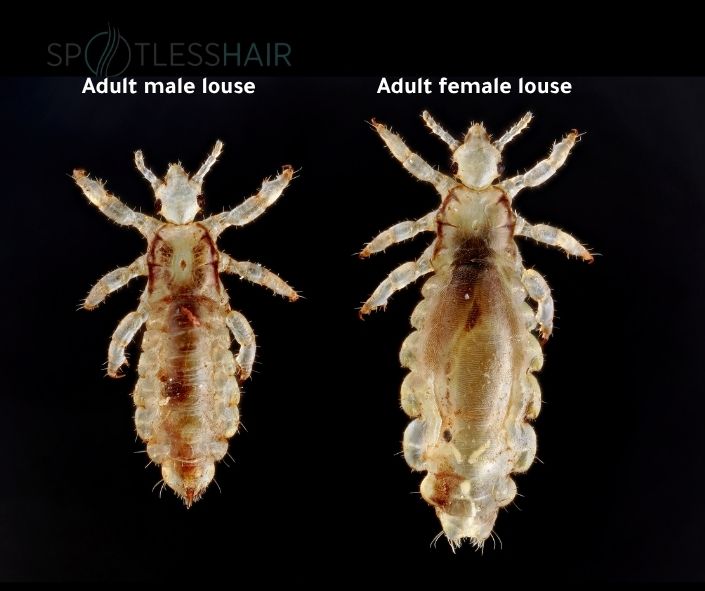
- The female louse is usually larger and longer than the male
- Her body appears fuller because she produces eggs
- The male is smaller and shorter
After mating, the female louse begins laying eggs (nits) on a daily basis. These eggs are firmly attached close to the scalp to ensure they receive the warmth needed for proper development. A female louse can typically lay around 4 to 6 eggs per day, which explains how quickly lice can spread if not detected early.
These eggs go through several stages before hatching into small nymphs. The nymphs then grow gradually into adult lice capable of reproducing within a short period of time. An adult louse usually lives for up to 30 days on the scalp, feeding on blood multiple times a day to survive.
However, once a louse is away from the scalp, it cannot survive for long. It typically dies within one to two days due to the lack of a food source. For this reason, lice transmission mainly occurs through direct contact rather than through objects or the environment.
Spotless Hair for Lice Removal
The lice life cycle is relatively short, meaning a single infestation can quickly turn into a larger problem. That’s why early and proper treatment is essential to stop the cycle and prevent reinfestation. At Spotless Hair, we provide specialized lice removal sessions using safe and effective techniques that target all stages of lice — helping you get rid of them quickly, often from the first session.

