
What do you know about head lice? Shape, color, life cycle and infection
Head lice are small insects that live on the scalp and feed on blood, and are one of the most common issues among children. To understand how to deal with it properly, it is important to know the life cycle of lice, their shape and color, the shape of lice eggs, and what are the types of lice? In this article, we explain everything you need to know about head lice in a simple and clear way.
What are the types of lice?
There are three types of lice, and each type lives in a different part of the body:
- Head lice
live in the hair on the head and feed on blood from the scalp. They are the most common, especially among children, and cause severe itching but are not dangerous. - Body lice
live in clothes and move to the skin to feed, and are considered the most dangerous type of lice because they can transmit some diseases in rare cases, and are often associated with extreme poor hygiene. - Pubic lice (genital lice)
live in the hair of rough areas such as the pubis or armpits, are often transmitted by direct contact, and do not transmit diseases but require special treatment.
The most dangerous types of lice
Body lice are the most dangerous type of lice because they live in clothing and are transmitted from one person to another when sharing clothes or bedding and move to the skin to feed. It is considered more dangerous than others because in rare cases it may transmit some diseases, and it often appears in environments that lack hygiene and health care, and unlike head lice, it does not depend on hair, but hides in fabrics and comes out to feed on the skin, and may cause health issues if not treated.
What is head lice?
Head lice are tiny parasitic insects, about the size of a sesame seed. Lice live only on the scalp and do not travel to other parts of the body. Lice need blood to survive, so they cannot live outside the hair for more than 24-48 hours. Lice do not fly, jump , swim,and are not transmitted from animals.
Head lice shape and color
Head lice are less than 3 mm long and are gray or light brown in color. Head lice change to a darker color after feeding because they are filled with blood, which helps them hide in the hair shafts. They also have six legs with small claws that enable them to hold on tightly to the hair and move quickly between the strands.
Lice eggs (nits)
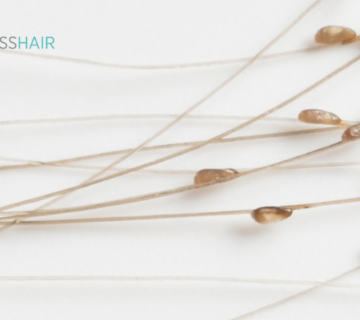
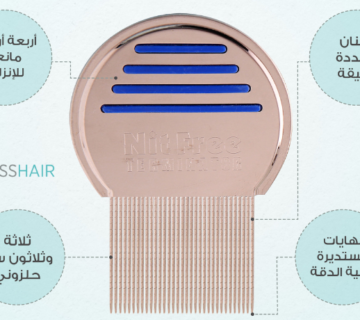
The eggs laid by the female lice are small and oval in shape, and are bright yellow in color as long as they contain the embryo, and then turn white after they hatch. It takes 7 to 10 days to hatch. Although the embryo comes out of the egg, the shell remains attached to the hair for several months and does not fall off spontaneously due to the high adhesion strength. The eggs must be removed by hand or with a specialized comb, as a regular comb cannot remove them.
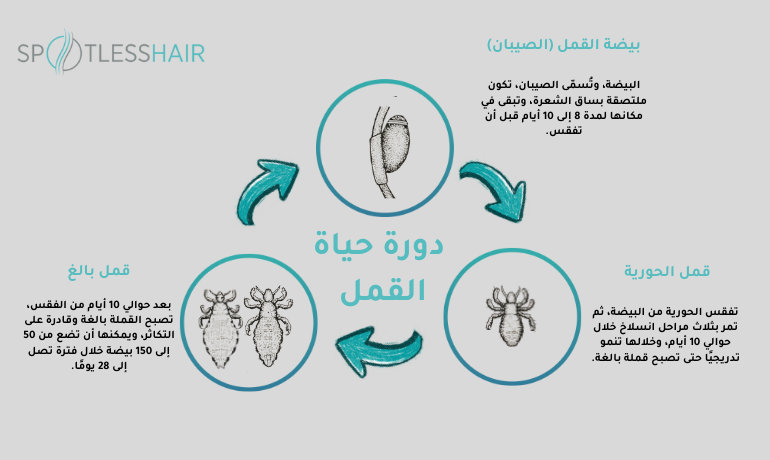
Lice Life Cycle
1) Egg stage (nitss)
The life cycle of lice begins when a female louse lays eggs, the eggs are small, oval-shaped, bright yellow in color, and need 7 to 10 days to hatch. The eggs remain attached to the hair and do not spontaneously fall out even after the embryo comes out.
2) Nymph stage
After hatching, the nymph, a small louse that resembles an adult louse but is smaller and lighter in color, emerges. It takes about 7 days for the nymph to mature into an adult louse capable of laying eggs.
3) Adult Louse Stage
An adult louse lays 2 to 4 eggs per day, approximately 100 eggs during its lifetime, making the infection spread quickly if the hair is not treated properly. The louse lives about 30 days on the scalp after which the louse’s life cycle ends.
How do lice feed?
The feeding process occurs in a simple but annoying and itchy way for children, as the lice make very small superficial bites on the scalp and then start sucking blood directly. Then it secretes saliva, which is a substance that prevents blood clotting when feeding, and this saliva is what causes irritation and itching in some children. They usually feed 3 to 4 times a day.
Where do lice live?
Lice always live close to the scalp because it provides them with the proper heat, food (blood), and moisture they need to survive. The areas behind the ears and at the back of the neck are the most common places to find them, because they are warm, dark, and do not receive direct light and this atmosphere is the most favorable for lice life.
They do not live on carpets, furniture, or animals, because they cannot survive outside the human scalp, and will die in a very short time if they are removed from their food source.
How pediculosis is transmitted among children
Head lice infestations are most commonly caused by head-to-head contact while children are playing or sitting near each other, which is the primary way in which infestations are transmitted from child to child. They can also be transmitted when sharing personal items such as combs, hats, headphones, and sleeping pillows.
Are lice dangerous for children?
Head lice do not pose a medical risk and do not transmit any diseases, but they can cause severe itching and irritation of the scalp due to intense scratching. If left untreated, constant scratching can lead to minor scratches or infections.
Are head lice different from animal lice?
Head lice are specific to humans and cannot live on animals such as cats, dogs, or others. They are designed to attach to human hair and live only on the heat of the human scalp. In contrast, lice that infest animals are a completely different species and cannot live on humans.
When should I start treatment?
It is advisable to start treatment as soon as you notice any sign of infestation, such as live lice moving around, seeing nits attached to the hair, or persistent itching behind the ear or on the back of the head. Early intervention prevents the spread of the infection within the home and school and helps to treat it quickly and effectively.
Frequently Asked Questions Lice Life Cycle
1. What color are head lice?
It is transparent or light gray before feeding, and brown or reddish brown after feeding.
2. How long does an adult louse live?
The louse lives about 30 days on the scalp.
3. How does the life cycle of lice begin?
It starts from the egg (nits), then the nymph stage, and then becomes an adult louse capable of reproduction.
4. What is the difference between nits and live lice?
The saiban is stationary and does not move, while the live louse moves quickly between the hairs.
5. Can the nits be easily seen?
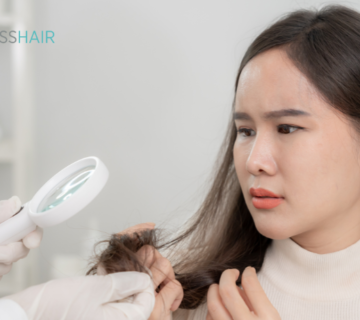
Yes, it can be seen, but it requires a strong light and careful examination. They usually appear as small white or yellowish dots that are fixed on the hair and don’t move. To find it easily, focus on areas such as behind the ears, the back of the head (back of the neck), and just below the neckline
6. What are the types of lice?
Lice are divided into three main types: Head lice, which live in the hair on the head and are the most common; body lice, which live in clothing and are the most dangerous because they can be transmitted through clothing and bedding; and pubic lice, which live in areas with coarse hair and are often transmitted by direct contact.
7. Why do lice infestations spread quickly in the hair?
The infection spreads quickly because a single louse may lay more than 100 eggs during its 30-day lifespan. This rapid reproduction leads to a rapid worsening of the infection if treatment is not started early.
Conclusion
Understanding the reality of head lice helps parents deal with them without fear. Knowing information about head lice andhow they are transmitted makes it easier to diagnose and prevent transmission between children. Because detecting head lice infestation early makes it easier to treat and prevent its spread, it is best to visit the Spotless Hair Center for a thorough lice check with a specialized camera that enables the team to clearly see the lice and nits and ascertain the true level of infestation. The center also offers advanced treatment using a safe and effective medical device that helps get rid of lice and nits in a quick and comfortable way without chemicals. Early attention and proper screening saves you time and effort, and ensures a safe and reliable treatment experience for your child.
- Book your appointment now at Spotless Hair via the booking link.
- For direct communication, you can contact the unified number (920035512)
- For more details and information, please visit our website.
Scientific references:
- American Academy of Pediatrics (AAP): Clinical information about the life cycle and treatment methods.
- Centers for Disease Control and Prevention (CDC): A Comprehensive Guide to Infection and Transmission.
- National Head Lice Association (NPA): A reference specializing in the extreme adhesion properties of eggs.
- World Health Organization (WHO): Information on parasites and transmission in children.
- KidsHealth: A simplified explanation of the mechanism of infection and where it occurs in the head.
- Mayo Clinic: Medical information about the symptoms, severity and how long it stays on the scalp


No comment