
Causes of Head Lice in Adults and Treatment Methods
Many people believe that head lice only affect children. However, the truth is that adults can also get head lice. Lice infestation is not related to age or personal hygiene. It is a common condition that can affect anyone, but it can be treated easily when handled correctly.
In this article, we explain whether adults can get lice, the causes of lice in adult hair, the symptoms, and how to treat and get rid of head lice in adults at home.
Do Adults Really Get Head Lice?
Yes, adults can get head lice just like children. Lice do not distinguish between children and adults, and they are not related to cleanliness. Instead, lice spread through direct head-to-head contact or by sharing personal items.
However, lice infestation tends to be more common among children due to frequent close contact during play, but this does not mean that adults are immune to it.
Causes of Lice in Adult Hair
The causes of lice in adult hair differ from those in children. Children often get lice due to direct contact during play, close head-to-head contact, and sharing personal items such as combs and accessories. Adults, however, usually do not engage in these behaviors as frequently.
However, adults can still get lice in certain situations, especially if there is an infected child in the household. Lice can spread from a child to a parent or another family member through close daily contact. It can also spread among siblings at home, even without contact with other children outside.
Other common causes of lice in adults include:
• Living in crowded or shared environments
• Traveling or staying in shared places such as hotels
• Using shared pillows or bedding
• Jobs that involve close contact with others, such as working in schools or daycare centers
Although lice are more common in children, they can still affect adults under certain conditions. Early detection and proper treatment remain the best way to prevent the spread and recurrence of infestation.
Symptoms of Lice in Adults
Although the causes may differ, the symptoms of lice in adults are often similar to those in children. Symptoms appear as a result of lice feeding on the scalp and may include:
• Persistent itching of the scalp
• A crawling or tingling sensation in the hair
• Redness or irritation on the scalp
• Visible lice or nits attached to the hair
• Difficulty sleeping due to itching
The severity of symptoms can vary from person to person, and they may not always appear clearly at the beginning. Adults often notice the infestation faster than children, as children may not realize or clearly express the itching or discomfort.
Early detection helps in managing the condition more effectively and preventing it from worsening.
Getting Rid of Head Lice in Adults
Step 1: Confirm the Infestation
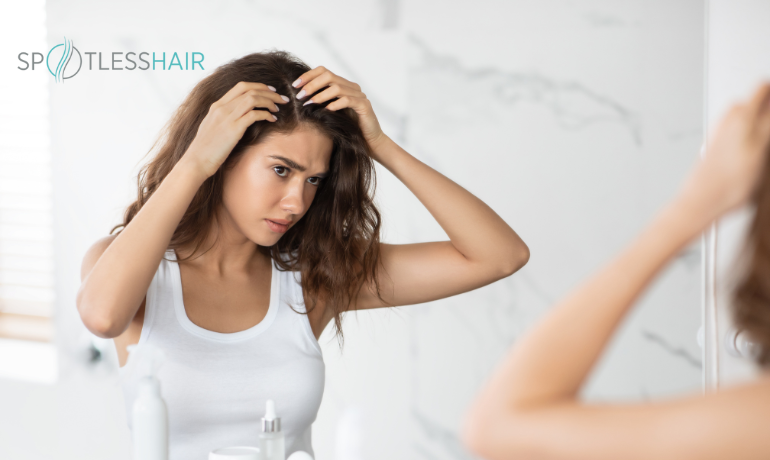
When you suspect lice, the first step is to confirm the infestation. This is done by carefully examining the hair under strong lighting, focusing on areas behind the ears and the back of the head. Make sure to identify live lice or nits attached to the hair shaft, not just dandruff.
Step 2: Check All Family Members
After confirming the infestation, it is important to check all family members. Lice can easily spread from one person to another, and sometimes the infestation may occur without obvious symptoms. Checking and treating all affected individuals at the same time helps reduce the chances of reinfestation.
Step 3: Treating Lice in Adults
Although there are many home remedies available, treating lice in adults can be more challenging. This is because effective combing requires precision and often assistance from another person to reach all areas of the scalp.
For this reason, specialized lice removal centers are considered an effective option, as they use professional techniques to remove lice and nits thoroughly from the first session.
You can learn more about lice treatment sessions for adults at Spotless Hair.
Step 4: Cleaning the Home After Infestation
Home cleaning is an important complementary step after treating lice. It is recommended to wash pillowcases, bedding, and clothing, as well as clean hair tools such as brushes and combs.
Do Lice Treatment Methods Differ Between Adults and Children?
Treating lice in adults can be more challenging than in children—not because lice are different, but because hair care routines differ. Children often have someone to help them comb and clean their hair thoroughly, making it easier to remove lice and nits completely.
Adults, on the other hand, usually rely on themselves for treatment. This can make it harder to reach all areas of the scalp, especially in cases of thick or long hair. As a result, some cases may require more precise and effective solutions to ensure complete removal of lice.
Common Mistakes to Avoid When Dealing with Lice
When dealing with lice, some common mistakes can lead to persistent or recurring infestations. It’s important to be aware of them:
• Cutting the hair: Some believe cutting hair helps eliminate lice, but lice do not disappear just by cutting hair.
• Using harsh mixtures or home remedies: Certain mixtures can irritate the scalp without effectively removing lice.
• Using multiple treatments at the same time: Combining different shampoos or treatments may cause scalp irritation and reduce effectiveness.
• Treating only one person: Leaving other family members unchecked or untreated can lead to reinfestation.
Conclusion
Lice are not limited to children—they can affect adults as well. However, it is a common condition that can be managed easily with early detection and the right treatment approach.
Although many home remedies are available, treating lice in adults can be more difficult due to the need for precise combing and assistance. Therefore, specialized lice removal centers are considered an effective option for complete removal of lice and nits.
You can learn more about lice treatment for adults at Spotless Hair for fast and accurate results.
- To book an appointment at the Spotless Hire Center, please click on the booking link.
- For communication and inquiries, you can contact the unified number (920035512)
- For more information, please visit our website.
Scientific references
- Saudi Ministry of Health – Head Lice.
- American Academy of Pediatrics – Head Lice Treatment Guidelines (AAP Guidelines).
- World Health Organization – General recommendations for prevention and treatment.


No comment