
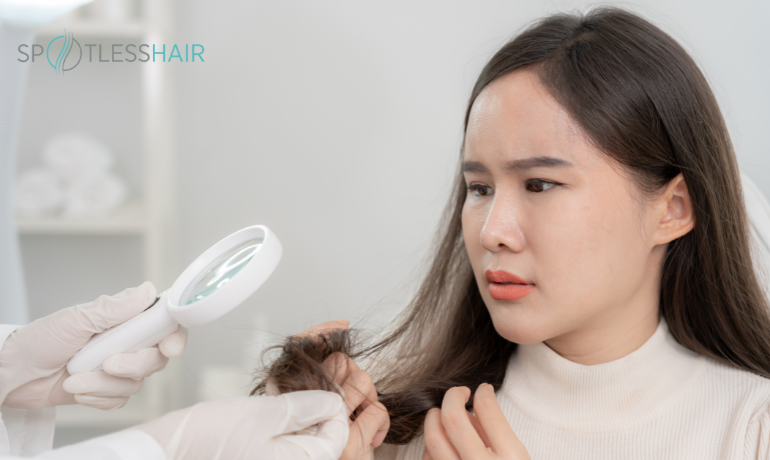
Are lice good for hair? Do lice lengthen hair?
Some people believe that having lice can help make your hair longer or thicker, and this belief has been passed down for years between moms and generations. But is this idea true? Or is it just a myth without any scientific basis? And are lice good for hair? In this article, we explain the truth about lice and their effect on hair growth.
Do lice really lengthen hair?
Some people believe that the presence of lice in the scalp may help make hair longer or thicker, but this belief is not true and is not based on any scientific basis. The length and growth of hair depends on a number of factors, the most important of which are genetic factors that determine the speed of hair growth and natural length, in addition to the general health of the body and good nutrition rich in proteins, vitamins and minerals such as iron, zinc and B vitamins. Scalp health, hormone balance, and daily hair care also play an important role in healthy hair growth. Reliable medical references indicate that these factors are the real basis for hair growth, and there is no scientific evidence linking the presence of lice to increased hair length or density.
Do lice actually increase or multiply hair?
No, lice do not actually grow hair. Hair density and length are determined by genetic factors and general body health such as good nutrition, hormone balance and scalp health, and there is no scientific evidence to prove that the presence or infestation of lice helps hair growth.
What do lice actually do to the scalp?
Lice live on the scalp and feed on blood through repeated superficial bites, which may cause mild irritation and itching of the scalp. This itching is caused by the interaction of the skin with the lice saliva during feeding, and the sufferer may feel discomfort, especially when the infection continues for a period of time without treatment, but lice do not change the nature of the hair and do not affect its growth directly.
Are lice good for hair?
No, lice are not good for the hair at all. On the contrary, the presence of lice on the scalp may cause constant itching and irritation, and with repeated scratching and pulling the hair may weaken the hair and lead to breakage or indirectly increase hair loss, without having any positive role in hair growth or density. To learn more about the impact of lice on the hair and scalp in detail, you can read the following article (What are the damages of lice on the scalp and hair?)
Why is the idea that lice are good for hair so widespread?
There have been claims that lice may be beneficial to the hair or scalp, based on the belief that they feed on blood and are constantly on the move, which is similar to “massaging” the scalp and stimulating blood circulation. Promoters of this idea believe that this can help with blood regeneration, prevent headaches, or help thicken hair and stimulate hair growth. The circulation of these statements through anecdotal stories and some platforms has contributed to the consolidation of this belief among a group of people, despite the absence of any scientific evidence to support it.
What is medical truth?
These statements are not based on any credible scientific evidence. There is nothing in medicine that proves that lice prevent clots, stimulate beneficial circulation, or contribute to hair thickening. Lice are parasitic insects that feed on blood through superficial bites and do not perform any kind of “therapeutic massage”. Their presence does not improve scalp health or support hair growth, and can cause itching, irritation, and discomfort when infestations persist.
From our real-life experience with lice and hair
In our experience dealing with multiple cases of lice infestation. We notice that many people, especially adults with lice, suffer from obvious hair fatigue, such as brittleness and breakage. This is often the result of prolonged lice infestation, severe itching, and the use of unsuitable products and methods to try to get rid of them. Some people also neglect their hair care due to the psychological stress associated with lice infestation, which has a negative impact on the health and appearance of the hair.
Frequently asked questions about the truth about lice and hair growth
1. What is the truth about lice and hair growth?
The truth about lice and hair growth is that this idea is not true. There is no scientific evidence to prove that lice help lengthen or thicken hair, rather, hair growth is related to genetic, health and nutritional factors.
2. Do lice lengthen or multiply hair?
No, lice do not lengthen or grow hair. This is just a popular belief with no scientific basis.
3. Why do some people believe that lice lengthen hair?
This belief stems from associating the movement of lice on the scalp with massage. Or the idea that they feed on blood, which are unscientific explanations that have spread among people.
4. Are lice good for hair?
Lice are not good for hair, and their presence can cause itching and irritation on the scalp without any benefit to hair growth.
Conclusion:
Lice do not make hair longer or thicker. All the rumors about their benefits to hair are nothing more than common beliefs that are not based on any scientific evidence. Healthy hair growth depends on obvious factors such as genetics, proper nutrition, and scalp health. Through real-life experience with multiple cases. It turns out that the presence of lice for a long time can have a negative impact on the condition of the hair, especially due to constant itching and many incorrect treatment attempts. This emphasizes the importance of dealing with lice properly to maintain hair and scalp health.
At Spotless Hair, we always recommend dealing with a lice infestation at its onset and not postponing treatment. Continued infestation can lead to increased itching and deterioration of the hair over time. Early treatment helps keep the scalp healthy and prevents the hair from becoming tired and brittle.
- You can easily book an appointment at the Spotless Hair Center via the booking link.
- To get in touch with our team, please contact 920035512
- For more information about our services, visit our website.
Scientific references:
- Saudi Ministry of Health – Head Lice.
- American Academy of Pediatrics – Head Lice Treatment Guidelines (AAP Guidelines).
- World Health Organization – General recommendations for prevention and treatment.


No comment