
What are the harms of lice on the scalp and hair? Do lice cause hair loss?
Does lice cause hair loss? A question that is frequently asked, and accompanied by other questions such as: What are the damages of lice to the scalp and hair? As the condition of the hair changes during a lice infestation, many people get confused between the direct effect of lice on the scalp and its indirect effect on the appearance and health of the hair. In this article, we clarify the truth about the effect of lice on hair and scalp, and separate what is medically proven and what is just a common belief.
Lice damage to the scalp
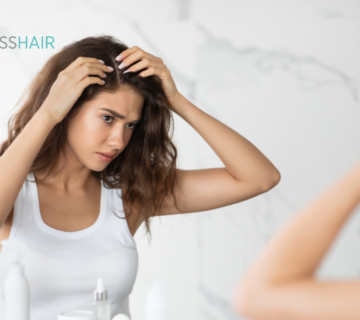
Causes lice infestation Severe and persistent itching of the scalp, causing redness and irritation of the skin, as well as scratches and superficial wounds as a result of repeated scratching. Lice infestations can also cause minor skin infections on the scalp when treatment is neglected or delayed, and in some rare cases may progress to a secondary bacterial infection.
Lice infestation causes discomfort and discomfort, sleep disturbance and lack of concentration, especially in children, which affects the quality of their daily life if the issue is not dealt with early on.
Lice infestation begins with minor early symptoms such as itching and discomfort, and with delayed treatment, these symptoms can turn into damage that affects the health of the scalp.
Do lice cause hair loss? What are the effects of lice on the scalp and hair?
Head lice do not directly cause hair loss. They do not attack the hair follicles and do not affect the natural hair growth cycle. Lice live on the scalp and feed only on blood. They do not feed on the hair itself and have no mechanism to thicken or weaken it from the roots.
However, in some cases, lice damage to the hair can be indirect and temporary as a result of the symptoms associated with lice infestation. Most notably, severe itching. Repeated and constant scratching can cause scalp irritation, superficial scratches, and sometimes minor skin infections, which can lead to hair breakage or the appearance of mild, temporary hair loss. It is not true hair loss from the roots.
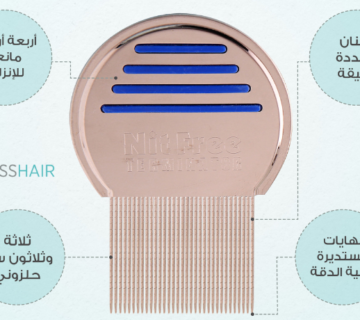
Also, some of the wrong ways of dealing with lice. Such as scratching vigorously or violently combing the hair to remove nits. may temporarily increase hair breakage. Medical sources indicate that these effects usually go away after the lice are treated and the scalp is soothed. They have no lasting effect on hair density or health. There are no scientific studies that prove that lice cause permanent hair loss or lead to persistent scalp weakness or hair breakage, and any change observed is only temporary and related to itching and irritation.
Are lice dangerous?
Medically speaking, lice are not a serious disease and do not cause serious health complications when handled properly. Lice are parasitic insects that live on the scalp and feed on blood, but they do not affect a child’s overall health.
Difference between lice and infectious skin diseases
Head lice differ from infectious skin diseases in terms of classification and impact. Lice are parasitic insects that live on the scalp and are not a skin disease in themselves, nor do they cause skin infections or pathologic scabs as in some infectious skin diseases.
In contrast, infectious skin diseases are medical conditions that affect the skin itself and often require medical diagnosis and treatment. Therefore, lice are not categorized as a serious skin disease, but rather as an annoying condition that can be easily dealt with once its nature is understood.
Do lice transmit diseases?
The scientific answer is certain: No, head lice do not transmit any disease. Lice are not considered a serious medical issue. The U.S. Center for Disease Control (CDC) has stated that head lice do not spread disease at all.
A real-life case from the Spotless Hire Center
- At the center, we received a case of a teenage girl who had been suffering from lice infestation for a long time. After several unsuccessful treatment attempts, the family was unable to completely eradicate the lice. Over time, the infestation continued without effective treatment, which clearly affected the health of the scalp and hair.
- When she arrived at the center, the hair was in very poor condition, tangled and brittle. It was difficult to comb due to neglect and the long duration of the injury. We also noticed multiple wounds on the scalp as a result of constant itching, with severe inflammation and irritation of the scalp.
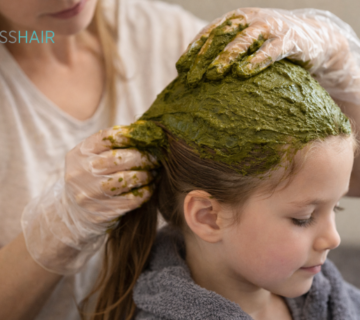
- After the lice and eggs were completely removed and the scalp was carefully cleaned. We explained to the family that the case needed extra care to treat the scalp infection, and advised the use of appropriate soothing creams to help the skin heal and the scalp return to normal.
Conclusion
Lice infestations may not be a serious health issue. But they can leave visible damage to the hair and scalp if not handled properly. Many wonder: What are the effects of lice on hair? The answer is that hair loss can occur indirectly as a result of constant itching, scalp irritation, or infections caused by repeated scratching.
Therefore, understanding lice damage and the effect of lice on hair helps in early treatment, minimizing hair loss, and keeping hair healthy, especially in children.
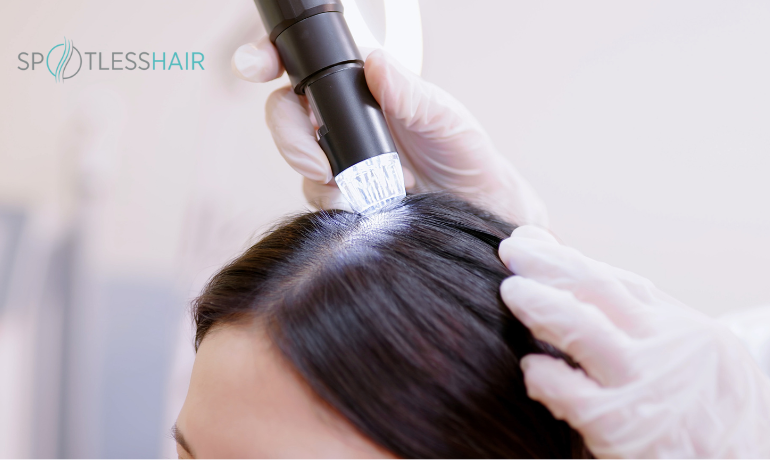
At Spotless Hair Lice Treatment Center, we offer specialized sessions to rid the hair of lice in its early stages. Before the issue worsens and leads to scalp irritation or complications due to constant itching. We rely on a thorough examination using a specialized camera that magnifies the scalp, which helps to clearly diagnose and pinpoint the exact condition. The hair is carefully cleaned in a single session, with a focus on scalp safety and client comfort, in order to address the issue early and thoughtfully.
- You can easily book an appointment at the Spotless Hair Center via the booking link.
- To get in touch with our team, please contact 920035512
- For more information about our services, visit our website.
Scientific references
- Healthline: Explains that lice do not thicken hair and do not help hair growth, and any change in hair is due to itching or repeated scratching.
- DermNet NZ: Explains that lice don’t damage hair, but scratching too hard can cause scalp irritation or temporary hair breakage.
- NIH/NCBI: Explains that itching may lead to scratching and then a secondary bacterial infection.


No comment