
Are head lice contagious? And how are head lice transmitted?
Are lice contagious? Can an infestation be easily transmitted from one person to another? This is a question many parents ask when they discover lice or lice eggs in their children’s hair. Some believe that lice eggs are contagious, or that lice fly or jump from place to place, but the scientific truth is different from these common beliefs.
Lice are small insects that live on the scalp and feed on blood. They cannot fly or jump, but are only transmitted through direct contact or the sharing of personal items. Understanding how lice are transmitted helps to know how they are actually transmitted, and whether or not lice are contagious in all cases.
Do lice fly or jump?
Lice do not fly at all. Lice do not have wings, and their body is small, flat, and unprepared for flight, so they cannot fly in any way. Therefore, the idea of lice traveling through the air or flying is scientifically incorrect. Lice cannot jump because their legs are not designed for jumping, they are short and thick and do not have the strength or flexibility that enables other insects to jump. On the other hand, lice have very strong claws at the ends of their legs that help them hold on to hair strands tightly. These tiny claws allow them to crawl from hair to hair, and thus move from head to head only when people are in close proximity.
Why do some people think lice fly or jump?
The spread of some misconceptions about lice is due to a combination of factors, not proven scientific facts, especially with the rapid transmission of infection within the family or school, some people think that lice have unrealistic abilities such as flying or jumping.
Sudden itching after an infestation gives the impression that the lice have moved quickly or abnormally, reinforcing these beliefs. In addition, some old information that has been circulating for years is still being passed around without verification, especially through word of mouth and social media.
These rumors and misconceptions have made lice seem more dangerous than they actually are, while the truth is that the way they are transmitted between children is simple and specific, and can be easily controlled when properly understood.
Are lice contagious?
Yes, lice are contagious and are easily transmitted, especially among children, due to the amount of direct contact between them. However, it is important to properly understand how lice are transmitted to avoid unnecessary worries and fears.
Are lice eggs contagious?
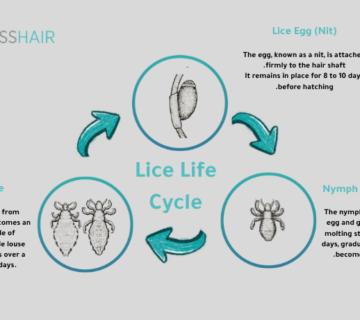
Lice eggs (nits) are not contagious because they are firmly attached to the hair shaft and are not easily transmitted. However, when the eggs hatch and the young lice emerge, infection is possible if there is direct contact between the heads.
How are lice transmitted?
Lice do not fly, jump, and are not transmitted through the air, nor are they associated with poor personal hygiene or a certain age, as lice infestations are transmitted between children and adults.
How are lice transmitted from person to person?
Moms often wonder how lice are transmitted from person to person and what are the ways to get lice. Lice are transmitted in two main ways: Direct transmission and indirect transmission.
First: Direct Transmission (Head-to-Head Contact)
More than 90% of lice infestations occur when a healthy person’s head comes into direct contact with an infected person’s head, so the lice are transferred from the infected head to the healthy head. Lice do not jump or fly; instead, they rely on their strong claws that enable them to cling tightly to a child’s hair and crawl from one hair to another on head-to-head contact. This is the only way they are transmitted between children.
Direct transmission may occur in situations such as:
-
-
-
- Head-to-head contact during play.
- Sitting very close to others.
- Taking group photos.
- Sharing smart devices closely.
- Sleeping next to an infected person.
- Close social interaction
-
-
Second: Indirect Transmission
This type is less common because lice cannot survive long away from the scalp. However, transmission can still happen through sharing personal items that come into contact with hair, such as:
-
-
- Hats or scarves.
- Pillows.
- Hairbrushes or combs.
- Headphones.
- Hair accessories
-
Are there other insects that live on the scalp other than head lice?
Some parents believe that there are several types of insects that live on the scalp, but in fact head lice are the only insects that specialize in living on the scalp, and there are no other insects that live in the hair permanently. Insects such as bedbugs or fleas do not live on the head and may only cause temporary bites.
Conclusion
In the end, it is important to know that are lice contagious? Yes, lice can be transmitted through direct contact, but understanding how lice are transmitted and following proper prevention methods greatly reduces infection. Also, lice eggs are not contagious in themselves, but the infection is transmitted in the presence of live, mobile lice. This is why knowing the true modes of lice transmission helps protect children and family members and prevent re-infestation.
At Spotless Hair, we believe that awareness is the first step to treatment, so we offer a thorough examination and specialized treatment that aims to remove lice and their eggs before they complete their life cycle, using a safe and effective medical device, to help families get rid of lice with confidence.
- To book an appointment at the Spotless Hire Center, please click on the booking link.
- For communication and inquiries, you can contact the unified number (920035512)
- For more information, please visit our website.
Scientific references
- Saudi Ministry of Health – Head Lice.
- American Academy of Pediatrics – Head Lice Treatment Guidelines (AAP Guidelines).
- World Health Organization – General recommendations for prevention and treatment.





No comment